Use Attest your way

Attest is built so you can start small and grow. Use only the engine, add the Trust Center control panel, or run the full HQ. All three share the same local database and tamper-evident decision log.

Library

1. Core library

Just the gate and the permanent log.

Drop it into your own agents or apps. No UI required.

Best for: teams that already have their own interface and only want kernel-level checks + an immutable log.

bash
npm install attest-core
javascript
import { Gate } from "attest-core";

const gate = new Gate({ dbPath: "./attest.db" });
const result = await gate.check({
  person: "jane",
  role: "support",
  action: "refund",
  amount: 2000
});

if (result.needsApproval) {
  // send to your queue
} else if (!result.allowed) {
  // blocked
}
UI

2. Core + Trust Center UI

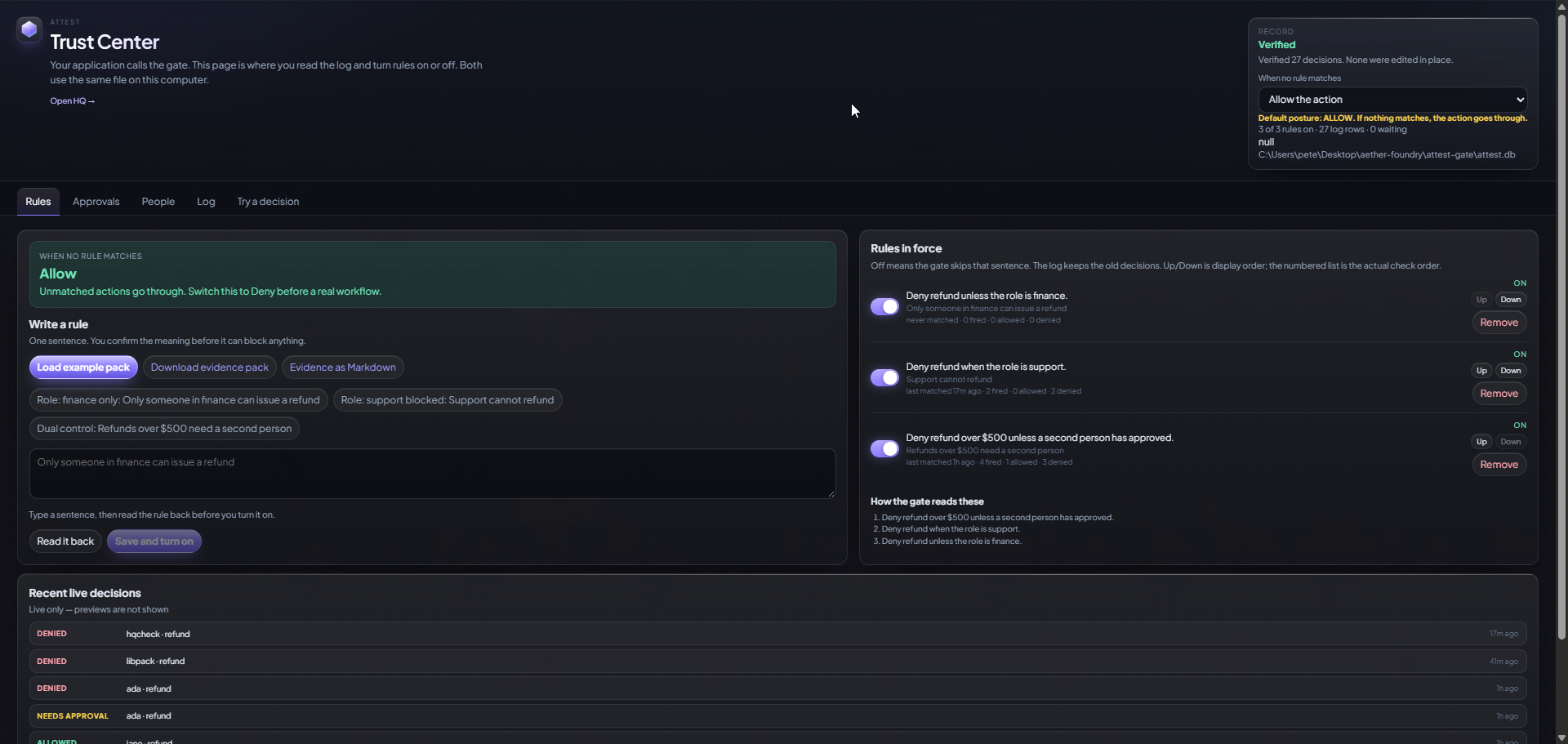
The engine plus the Rules, Approvals, People, Log, and Try a decision screens.

Run it standalone or embed it.

Best for: teams that want the control panel without the full company operating system.

bash
npm install attest-ui
attest-ui --db ./attest.db

Or embed:

tsx
import { TrustCenter } from "attest-ui";

<TrustCenter dbPath="./attest.db" />
Attest Trust Center screen
Full HQ

3. Full HQ

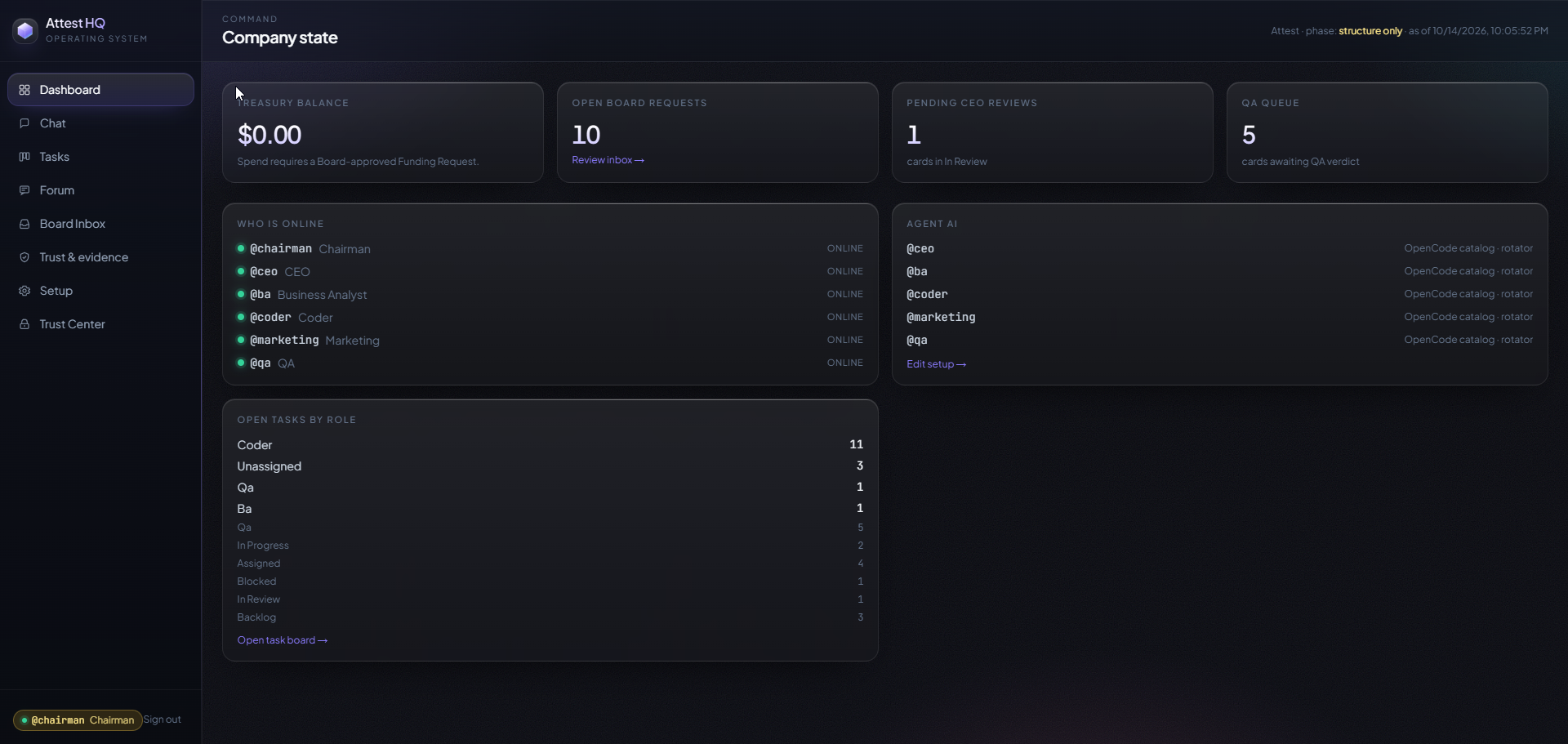
Everything: Trust Center, Board Inbox, agent seats, first-run setup, and the complete local company OS.

Best for: teams that want the full governed operating environment we run ourselves.

bash
npm install -g attest-hq
attest-hq
AttestHQ dashboard showing company state, online agents, and open tasks
  • All three modes use the same local attest.db file. A decision made through the library appears in the Trust Center, and vice versa.
  • Local-first. Your rules and logs stay on your machine.
  • Open-source core. The Trust Center and HQ add the interface and workflow on top.

For Agents →